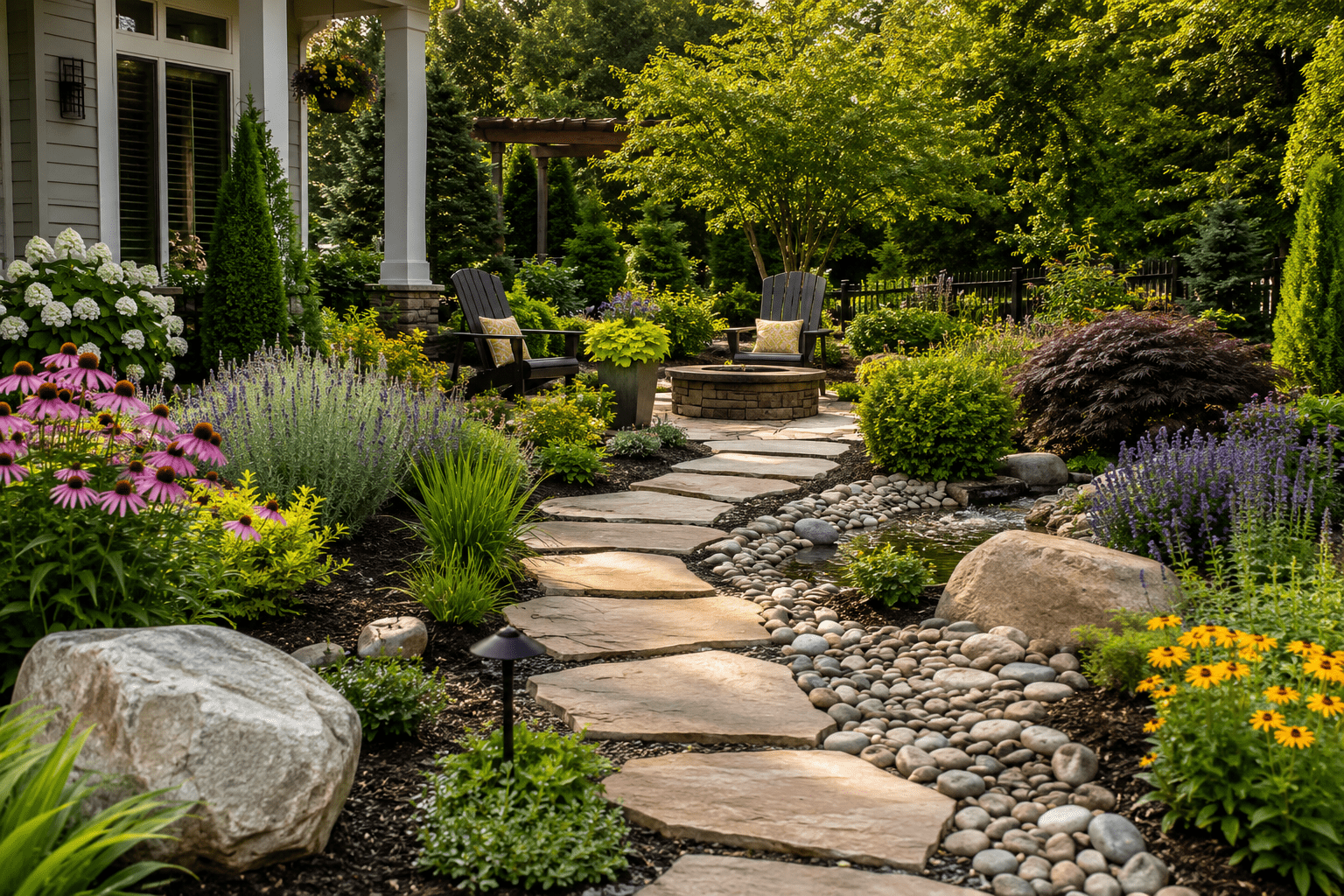
A beautiful landscape doesn’t have to require endless weekends of watering, weeding, pruning, and mowing. Many homeowners dream of an attractive yard but struggle to find the time needed to maintain it. Between work, family, travel, and everyday responsibilities, landscape maintenance often falls to the bottom of the to-do list.
Fortunately, thoughtful landscape design can dramatically reduce the amount of time and money required to keep your property looking its best. By choosing the right plants, materials, and layout, you can create an outdoor space that stays attractive throughout the seasons with minimal effort.
Whether you’re designing a brand-new landscape or updating an existing yard, these low-maintenance landscaping ideas will help you enjoy a beautiful outdoor space without sacrificing your weekends.
Why Low-Maintenance Landscaping Matters
A well-designed low-maintenance landscape offers numerous benefits beyond simply saving time.
These landscapes typically:
- Require less watering
- Reduce mowing
- Minimize pruning
- Lower fertilizer use
- Suppress weeds naturally
- Reduce pest problems
- Save money on maintenance
- Increase curb appeal
- Improve property value
The secret isn’t removing plants—it’s choosing smarter plants and designing the landscape to work with nature rather than against it.
1. Choose Native Plants
Native plants are one of the smartest investments you can make.
Since they evolved in your local climate, they naturally tolerate local temperatures, rainfall, insects, and soil conditions. Once established, many native species require little supplemental watering and almost no fertilizer.
Examples include:
- Purple Coneflower
- Black-Eyed Susan
- Little Bluestem Grass
- Prairie Dropseed
- Wild Bergamot
- Butterfly Weed
Native plants also attract butterflies, hummingbirds, and beneficial pollinators while requiring significantly less maintenance than exotic ornamentals.
2. Replace Large Lawn Areas
Lawns are often the most maintenance-intensive feature of any yard.
They require:
- Weekly mowing
- Regular fertilizing
- Weed control
- Watering
- Aeration
- Overseeding
Instead of covering your property with grass, reduce lawn size by adding:
- Mulched planting beds
- Decorative gravel
- Groundcovers
- Native gardens
- Outdoor living spaces
- Stone pathways
Smaller lawns mean fewer hours spent behind a mower.
3. Install Mulch Everywhere You Can
Mulch is one of the easiest ways to reduce maintenance.
A 2–3 inch layer of mulch:
- Prevents weeds
- Retains soil moisture
- Protects plant roots
- Reduces erosion
- Keeps soil cooler
- Improves soil as it decomposes
Organic mulches include:
- Hardwood mulch
- Cedar mulch
- Pine bark
- Shredded leaves
Refreshing mulch once each year keeps planting beds looking fresh while greatly reducing weeding.
4. Plant Perennials Instead of Annuals
Annual flowers are beautiful, but they require replanting every year.
Perennials return season after season with minimal effort.
Excellent low-maintenance choices include:
- Hosta
- Daylily
- Sedum
- Catmint
- Coral Bells
- Salvia
- Peony
- Russian Sage
Mix early-, mid-, and late-season bloomers so your landscape has color throughout the growing season.
5. Use Decorative Gravel and River Rock
Stone never needs watering.
Gravel and decorative rock create attractive planting areas while eliminating mulch replacement in many locations.
They work especially well around:
- Mailboxes
- Utility boxes
- Foundation beds
- Dry creek beds
- Side yards
- Modern landscapes
Adding landscape fabric beneath decorative stone further reduces weeds.
6. Install Automatic Irrigation
Dragging hoses across the yard quickly becomes tiresome.
A drip irrigation or smart sprinkler system provides water exactly where plants need it.
Benefits include:
- Less water waste
- Healthier plants
- Lower water bills
- Consistent watering
- Vacation-friendly maintenance
Smart irrigation controllers can even adjust watering schedules based on rainfall and weather forecasts.
7. Select Slow-Growing Shrubs
Fast-growing shrubs often require multiple prunings every season.
Instead, choose naturally compact varieties such as:
- Boxwood
- Inkberry Holly
- Dwarf Hydrangea
- Japanese Spirea
- Dwarf Ninebark
- Dwarf Arborvitae
These shrubs maintain their shape naturally and rarely require aggressive trimming.
8. Use Groundcovers Instead of Grass
Groundcovers fill empty spaces while preventing weeds.
Popular options include:
- Creeping Thyme
- Ajuga
- Sweet Woodruff
- Creeping Jenny
- Sedum
- Pachysandra
Groundcovers eliminate mowing while creating lush, finished planting areas.
Many also produce flowers that attract pollinators.
9. Create Larger Planting Beds
Small planting beds with narrow edges require constant trimming and maintenance.
Instead, install larger, flowing planting beds.
Benefits include:
- Less edging
- Fewer mowing obstacles
- Better plant groupings
- Reduced lawn size
- Easier mulching
Curved planting beds also create a more natural appearance.
10. Add Hardscaping
Every square foot of patio is one less square foot of lawn to mow.
Hardscape features include:
- Patios
- Walkways
- Retaining walls
- Seating walls
- Fire pits
- Gravel courtyards
Besides reducing maintenance, hardscapes create outdoor living spaces where homeowners can relax and entertain.
11. Plant Evergreen Shrubs
Evergreens provide year-round color without requiring seasonal flower replacements.
Good options include:
- Arborvitae
- Juniper
- Boxwood
- Yew
- Dwarf Spruce
- Hinoki Cypress
Evergreens create structure during winter while providing privacy and wind protection. Not only that, but evergreens are a great way to place a buffer between your property and your neighbors.
12. Group Plants by Water Needs
One common mistake is mixing thirsty plants with drought-tolerant varieties.
Instead, group plants according to their irrigation requirements.
This approach:
- Prevents overwatering
- Saves water
- Reduces disease
- Improves plant health
- Simplifies irrigation design
Landscape professionals call this “hydrozoning.”
13. Choose Disease-Resistant Plants
Plants that constantly battle disease become expensive and time-consuming.
Look for varieties bred for resistance against common problems.
Examples include:
- Disease-resistant roses
- Mildew-resistant phlox
- Blight-resistant crabapple
- Rust-resistant hollyhocks
Healthier plants require fewer pesticides and less intervention.
14. Install Landscape Edging
Clean landscape edges make an enormous visual difference.
Permanent edging helps:
- Keep mulch contained
- Prevent grass invasion
- Reduce trimming
- Create clean lines
Popular edging materials include:
- Steel edging
- Aluminum edging
- Natural stone
- Concrete curbing
- Brick
Professional edging can dramatically reduce yearly maintenance.
15. Keep the Design Simple
One of the biggest landscaping mistakes is overcomplicating the design.
Instead of planting dozens of different species, choose a limited palette of plants repeated throughout the landscape.
Repeating plant varieties creates:
- Visual unity
- Easier maintenance
- Simpler pruning
- Better purchasing efficiency
- Cleaner appearance
Professional landscape designers often use fewer plant varieties than homeowners expect.
A simple design almost always looks more elegant.
Bonus Tips for an Even Easier Landscape
Want to reduce maintenance even further? Consider these additional strategies:
Skip High-Maintenance Hedges
Formal hedges require frequent trimming. Natural shrub groupings provide similar beauty with much less work.
Use Large Containers Sparingly
Container gardens dry out quickly and require frequent watering. If you enjoy containers, install self-watering planters.
Avoid Plants That Self-Seed Aggressively
Some beautiful flowers spread rapidly and require constant removal.
Research plants before purchasing them.
Leave Room for Mature Growth
Crowded plants require more pruning and are more susceptible to disease.
Always plant according to mature size rather than current size.
Choose Long-Blooming Plants
Plants with extended bloom periods provide more color with less maintenance.
Examples include:
- Catmint
- Coreopsis
- Salvia
- Coneflower
- Blanket Flower
Common Landscaping Mistakes That Increase Maintenance
Many homeowners unintentionally create landscapes that require more work than necessary.
Avoid these common mistakes:
- Planting trees too close to the house
- Installing tiny planting beds
- Using too many annual flowers
- Overwatering
- Choosing invasive plants
- Ignoring mature plant size
- Mixing sun-loving and shade-loving plants
- Using poor-quality mulch
- Neglecting soil preparation
- Planting without a long-term plan
Planning ahead can save hundreds of hours of maintenance over the life of your landscape.
Building a Landscape That Ages Gracefully
A truly low-maintenance landscape isn’t just easy to care for today—it continues looking beautiful five, ten, or even twenty years from now.
Focus on timeless design principles:
- Layer plants by height.
- Use repetition instead of excessive variety.
- Incorporate evergreen structure.
- Mix seasonal interest.
- Leave room for growth.
- Invest in quality hardscape materials.
- Improve your soil before planting.
- Choose plants suited to your local climate.
When these principles guide your design, your landscape becomes more attractive with each passing year while requiring less effort to maintain.
Final Thoughts
A stunning landscape doesn’t have to consume your weekends. By making thoughtful design choices from the beginning, you can create an outdoor space that remains healthy, colorful, and inviting with surprisingly little upkeep.
Whether it’s replacing sections of lawn with native plantings, installing mulch and decorative stone, selecting long-lived perennials, or incorporating durable hardscape features, each decision contributes to a landscape that works with your lifestyle rather than against it.
The best landscapes balance beauty, functionality, and sustainability. They provide year-round curb appeal, support local wildlife, conserve water, and reduce ongoing maintenance costs—all while giving you more time to enjoy your home instead of constantly working in the yard.
If you’re planning a landscape renovation, start by identifying the areas that require the most maintenance today. Replacing those high-maintenance features with smarter, low-maintenance alternatives can transform your property into an outdoor space that’s as practical as it is beautiful. With careful planning and the right plant selections, you can enjoy a landscape that enhances your home’s value, reflects your personal style, and stays attractive season after season with minimal effort.