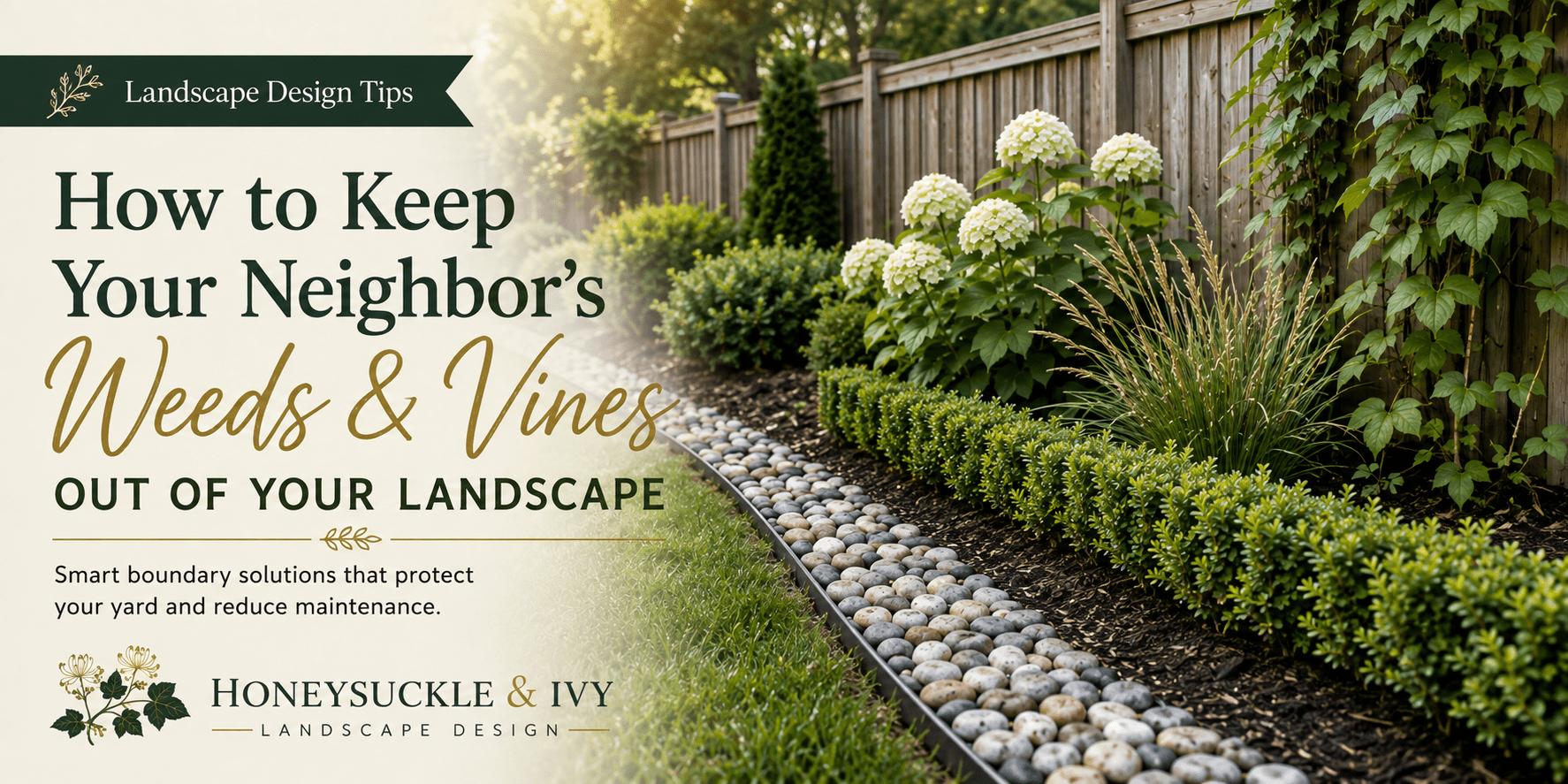
A beautiful landscape doesn’t end at your front door—it extends to the edges of your property. Unfortunately, that’s often where homeowners encounter one of the most frustrating landscaping challenges: weeds, invasive vines, and aggressive plants creeping in from a neighboring yard.
Even if you meticulously maintain your landscape, neighboring weeds can quickly spread by underground roots, wind-blown seeds, creeping grass, or climbing vines. The result is more time spent weeding, increased maintenance costs, and the gradual decline of your carefully designed landscape.
The good news? With thoughtful planning and the right landscape design strategies, you can significantly reduce unwanted encroachment while creating a clean, attractive property boundary.
Why Property Line Landscaping Matters
Many homeowners focus on planting beautiful shrubs, flowers, and trees but overlook one of the most important areas of the landscape—the property line.
Without a defined boundary, common problems include:
- Creeping lawn grass invading landscape beds
- Dandelions and other weed seeds blowing into mulch
- English ivy, Virginia creeper, and other vines spreading across the property line
- Aggressive ornamental grasses or bamboo sending underground runners into neighboring yards
- Tree roots competing for water and nutrients
- Increased maintenance and weeding throughout the growing season
Designing a landscape with a protective buffer along the property line helps preserve both the beauty and health of your outdoor space.
1. Install a Root Barrier
One of the most effective long-term solutions is installing a root barrier. Root barriers are easiest to incorporate during the initial design phase, making professional planning one of the smartest investments a homeowner can make.
Root barriers are heavy-duty, high-density plastic panels installed vertically underground to prevent invasive roots and underground runners from crossing property lines.
They are especially useful for controlling:
- Bamboo
- Running ornamental grasses
- Mint
- Aggressive groundcovers
- Certain invasive shrubs
Most residential installations are buried 18–30 inches deep, with about an inch extending above the soil surface to stop surface runners.
While homeowners can install root barriers themselves, incorporating them during a landscape installation is often easier and more cost-effective.
2. Create a Landscape Buffer Zone
Instead of planting directly against the property line, leave a maintenance strip between your landscape and your neighbor’s yard. Buffer zones are one of our favorite low-maintenance landscape strategies because they dramatically reduce future maintenance
A buffer zone typically measures 2–4 feet wide and may include:
- Hardwood mulch
- Decorative gravel
- River rock
- Steel landscape edging
This open area provides several advantages:
- Easier weed removal
- Better air circulation
- Cleaner landscape appearance
- Simplified mowing and edging
- Quick access for seasonal maintenance
Professional landscape designers often include this feature because it dramatically reduces long-term maintenance.
3. Install Quality Landscape Edging
Landscape edging creates a clear physical separation between lawn and planting beds.
High-quality materials include:
- Powder-coated steel
- Aluminum
- Natural stone
- Concrete edging
Unlike inexpensive plastic edging, metal edging lasts for decades, resists frost heave, and provides crisp, clean lines that enhance curb appeal.
4. Use Decorative Stone Along the Property Line
Decorative stone creates an attractive, low-maintenance barrier that makes weeds easier to spot and remove.
Popular options include:
- River rock
- Crushed granite
- Decorative gravel
- Limestone chips
When combined with commercial-grade landscape fabric, decorative stone reduces weed growth while improving drainage and minimizing erosion.
5. Build Raised Landscape Beds
Raised planting beds naturally discourage invasive grasses and make routine maintenance easier.
Benefits include:
- Better drainage
- Improved soil quality
- Easier planting
- More defined borders
- Reduced weed pressure
Raised beds also add visual interest and help organize the landscape into distinct planting zones.
6. Add a Fence or Decorative Screen
Although fences won’t stop underground roots, they are excellent at preventing above-ground invasion.
Privacy fences, decorative panels, or black aluminum fencing help block:
- Climbing vines
- Wind-blown debris
- Encroaching shrubs
- Unwanted foot traffic
For maximum protection, combine a fence with a root barrier beneath the fence line.
7. Plant a Living Privacy Border
Strategically placed shrubs create an attractive, natural barrier while enhancing privacy.
Excellent choices include:
- Boxwood
- Inkberry Holly
- Arborvitae
- Viburnum
- Hicks Yew
When planting near a property line, always leave enough room for mature growth and future maintenance without encroaching on neighboring property. Selecting shrubs with year-round interest helps create a beautiful boundary that looks attractive during every season.
8. Remove Invasive Vines Early
The sooner invasive vines are removed, the easier they are to control.
Common offenders include:
- English Ivy
- Virginia Creeper
- Wintercreeper
- Trumpet Vine
- Wild Grape
Inspect your property line every few weeks during the growing season. Removing young shoots before they become established saves countless hours of future maintenance.
9. Choose Groundcovers Carefully
Groundcovers help suppress weeds by covering bare soil, but not all groundcovers are created equal.
Choose plants that stay where they’re planted rather than aggressive spreaders.
Good options include:
- Creeping Thyme
- Sedum
- Sweet Woodruff (for shade)
- Moss Phlox
Avoid invasive species that may eventually become the very problem you’re trying to prevent.
10. Make Property Line Inspections Part of Your Routine
Even the best-designed landscapes benefit from routine inspections.
Walk your property line monthly and look for:
- New weeds
- Creeping grass
- Emerging vines
- Root suckers
- Mulch displacement
- Drainage concerns
Addressing problems early is far easier than correcting an established infestation.
Design for Prevention, Not Just Appearance
One of the biggest differences between a professionally designed landscape and a do-it-yourself project is that professional designs consider both aesthetics and long-term maintenance.
At Honeysuckle & Ivy, we believe every landscape should be beautiful, functional, and easy to maintain for years to come. Thoughtful property line planning helps protect your investment, reduces ongoing maintenance, and creates a cleaner, more polished appearance throughout your landscape.
Whether you’re starting with a new landscape or renovating an existing one, incorporating protective boundaries into your design will save time, reduce frustration, and keep your outdoor spaces looking their best.
Final Thoughts
You can’t control what grows in your neighbor’s yard, but you can control how well your landscape is protected.
Beautiful landscapes aren’t created by adding more plants—they’re created through thoughtful planning from the very beginning. Simple features like root barriers, maintenance strips, landscape edging, decorative stone, and strategic plant selection work together to create a resilient landscape that stands the test of time.
When your landscape is designed with both beauty and practicality in mind, you’ll spend less time pulling weeds—and more time enjoying your outdoor space.
FAQ
Q: What is the best way to stop weeds from spreading from a neighbor’s yard?
A: A combination of a root barrier, landscape edging, and a 2–4 foot mulch or gravel buffer provides the best long-term protection.
Q: Will a fence stop invasive plants?
A: A fence blocks above-ground vines and debris, but it won’t stop underground roots or rhizomes. Pair it with a root barrier for the best results.
Q: How wide should a landscape buffer be?
A: A maintenance strip 2–4 feet wide provides enough room for inspections, weeding, edging, and future plant growth.
Q: What plants make good living boundaries?
A: Boxwood, arborvitae, inkberry holly, viburnum, and Hicks yew create attractive, manageable borders when planted with adequate spacing.