First impressions matter. Whether you’re welcoming friends, enjoying your home after a long day, or preparing to sell your property, your landscaping plays a major role in how your home is perceived. A thoughtfully designed landscape enhances architecture, increases property value, and creates a warm, inviting atmosphere. On the other hand, even a beautiful home can lose its charm if the landscaping is neglected or poorly planned.
Many homeowners unintentionally make landscaping decisions that diminish curb appeal rather than enhance it. One common mistake homeowners make is planting directly on the property line without planning for invasive weeds or roots. Fortunately, most of these mistakes are easy to recognize and can be corrected with thoughtful planning and design.
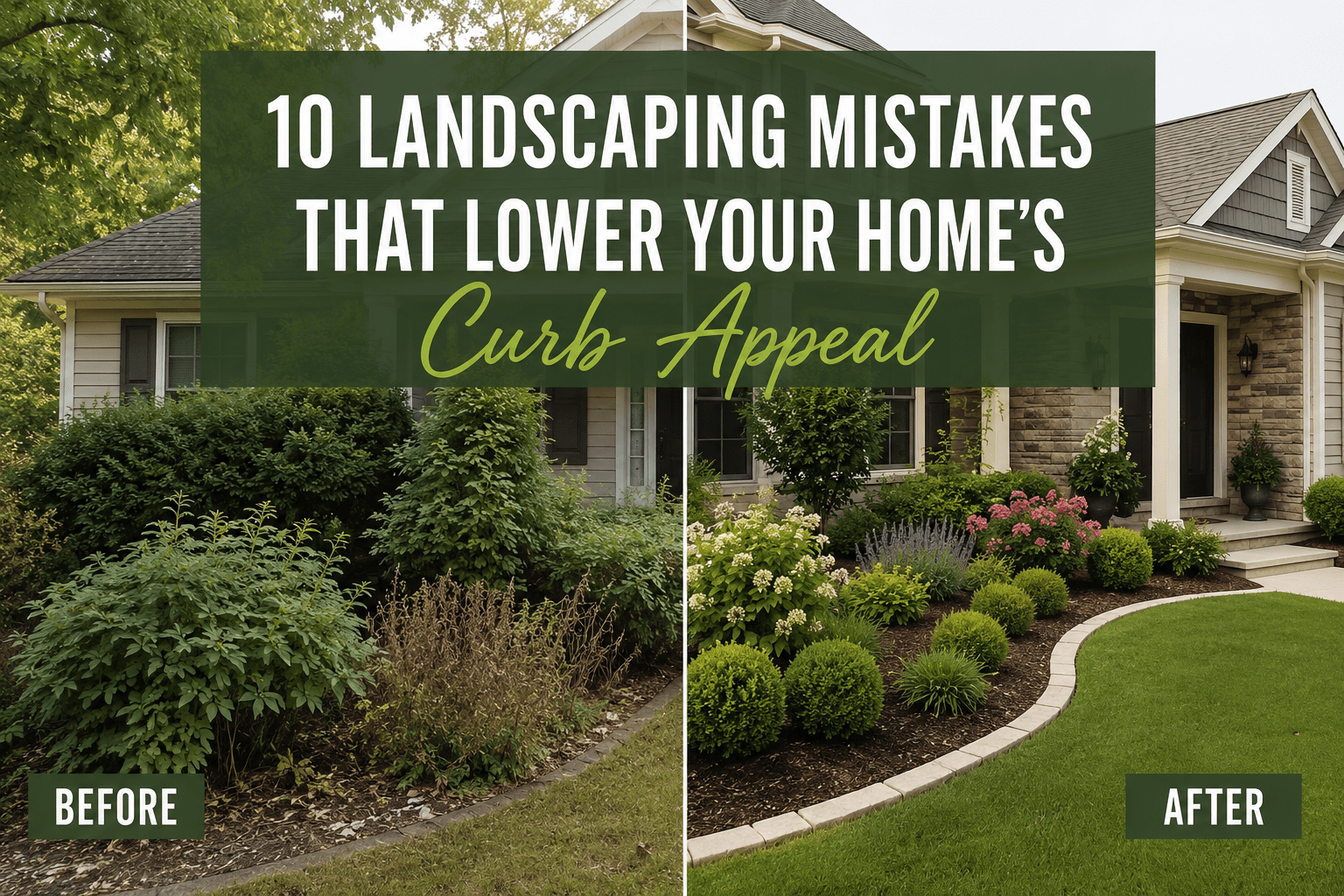
Here are ten of the most common landscaping mistakes that lower your home’s curb appeal—and what you can do instead.
1. Overgrown Shrubs That Hide Your Home
One of the biggest landscaping mistakes is allowing foundation shrubs to grow unchecked. While bushes are intended to soften the appearance of a home’s foundation, oversized shrubs often have the opposite effect.
Large shrubs can:
- Cover windows
- Hide architectural features
- Block natural light
- Make the home appear smaller
- Create a neglected appearance
Many homes have evergreen shrubs planted decades ago that were originally only two feet tall. Over time, they can grow to six feet or more, completely overwhelming the front of the house.
Better Solution
Choose plants based on their mature size rather than their size at the garden center.
Instead of relying on constant pruning, select compact varieties that naturally stay within scale. Trim shrubs regularly, keeping windows visible and allowing architectural details to shine.
Your landscaping should frame your home—not hide it.
2. Planting Without a Plan
A common mistake is purchasing plants simply because they’re attractive at the nursery.
Without a design plan, homeowners often end up with:
- Random colors
- Mismatched textures
- Uneven spacing
- Plants competing for space
- Gardens that lack balance
The result can feel chaotic rather than intentional.
Better Solution
Professional landscape design begins with a master plan.
Before planting anything, consider:
- Mature plant size
- Bloom times
- Color harmony
- Seasonal interest
- Maintenance requirements
- Sun exposure
- Soil conditions
A cohesive design creates visual flow that naturally guides the eye around your property.
3. Ignoring Scale and Proportion
Scale is one of the most overlooked principles in landscape design.
Tiny plants surrounding a large two-story home can appear insignificant, while oversized trees planted near a small cottage can make the home feel crowded.
Everything should work together proportionally.
Signs of Poor Scale
- Trees planted too close to the home
- Flower beds that are too narrow
- Large boulders overwhelming small spaces
- Tiny foundation plants on expansive homes
Better Solution
Design should reflect the size of your home.
Large homes often require:
- Wider planting beds
- Larger specimen trees
- Layered shrubs
- Multiple landscape tiers
Smaller homes benefit from:
- Simpler planting schemes
- Compact ornamental trees
- Lower-growing shrubs
- Clean, uncluttered borders
Balanced proportions create elegance.
4. Too Much Lawn, Not Enough Landscaping
Large expanses of grass can make a property feel empty and unfinished.
While a healthy lawn provides a beautiful backdrop, excessive turf lacks visual interest.
Lawns also require:
- Mowing
- Fertilizing
- Watering
- Weed control
- Regular maintenance
Better Solution
Break up large lawn areas with:
- Curved landscape beds
- Flower gardens
- Ornamental trees
- Decorative grasses
- Seating areas
- Landscape lighting
Adding planting beds introduces texture, color, and year-round interest while reducing maintenance.
5. Using Too Many Different Plant Varieties
It’s easy to fall into the trap of buying “one of everything.”
Unfortunately, landscapes filled with dozens of unrelated plant varieties often look busy and disorganized.
Professional landscapes typically use repetition rather than endless variety.
Better Solution
Choose a limited plant palette.
Repeat the same shrubs, perennials, ornamental grasses, and groundcovers throughout the landscape.
Repetition creates rhythm and gives the property a polished, professionally designed appearance.
Think quality over quantity.
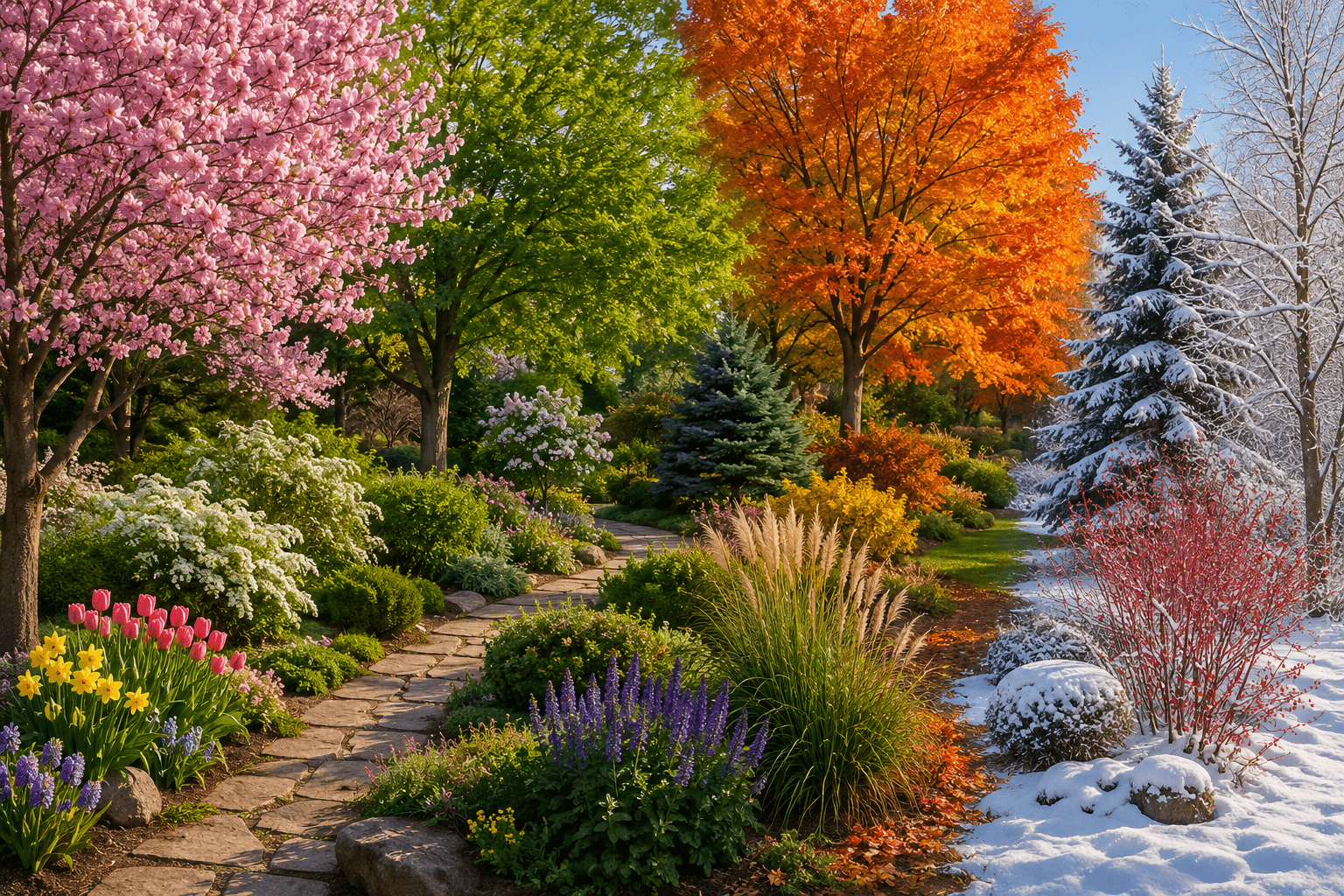
6. Forgetting About Year-Round Interest
Many landscapes look spectacular for just a few weeks each spring before becoming plain for the remainder of the year.
A beautiful landscape should provide interest during every season.
Spring
- Flowering trees
- Tulips
- Daffodils
- Early perennials
Summer
- Hydrangeas
- Coneflowers
- Daylilies
- Black-eyed Susans
Autumn
- Ornamental grasses
- Fall foliage
- Colorful berries
- Seed heads
Winter
- Evergreen shrubs
- Decorative bark
- Winter berries
- Architectural branches
Better Solution
Design with all four seasons in mind.
Layer plants so that something attractive is always happening in the landscape.
7. Poorly Defined Landscape Beds
Straight edges that slowly disappear into the lawn create a messy appearance.
Likewise, undefined planting beds allow grass to invade flower gardens.
This blurs the distinction between lawn and landscape.
Better Solution
Install crisp bed edges.
Options include:
- Natural trench edging
- Steel edging
- Stone borders
- Brick edging
- Concrete curbing
Clean lines instantly improve curb appeal and make routine maintenance easier.
8. Neglecting Mulch and Maintenance
Even the best landscape design loses its beauty without regular maintenance.
Common issues include:
- Faded mulch
- Weeds
- Dead plants
- Overgrown perennials
- Untrimmed shrubs
- Fallen branches
These problems create an impression of neglect.
Better Solution
Refresh mulch annually.
Maintain approximately two to three inches of mulch while keeping it away from tree trunks.
Perform seasonal maintenance that includes:
- Deadheading flowers
- Pruning shrubs
- Removing weeds
- Cleaning bed edges
- Replacing damaged plants
Small maintenance tasks have a significant impact on overall appearance.
9. Skipping Landscape Lighting
Many homeowners spend thousands of dollars on landscaping only to let it disappear after sunset.
Landscape lighting dramatically extends the beauty and usability of your outdoor spaces.
Lighting also improves:
- Safety
- Security
- Visibility
- Property value
Better Solution
Use lighting strategically.
Highlight:
- Front entryways
- Specimen trees
- Architectural features
- Walkways
- Garden beds
- House numbers
Warm white LED lighting creates an elegant appearance without overwhelming the landscape.
Less is often more.
10. Designing for Today Instead of the Future
One of the most expensive landscaping mistakes is failing to think long-term.
Plants grow.
Trees mature.
Families change.
Maintenance needs evolve.
A landscape that looks perfect today may become overcrowded in five years.
Better Solution
Design for mature growth.
Allow proper spacing between plants.
Consider:
- Future tree canopies
- Root systems
- Drainage
- Irrigation
- Privacy needs
- Outdoor entertaining
- Long-term maintenance
A well-designed landscape should continue improving with age.
Bonus Mistake: Following Every Landscaping Trend
Social media is filled with trendy landscaping ideas.
While trends can be inspiring, not every style complements every home.
Examples include:
- White decorative rock everywhere
- Artificial turf in unsuitable climates
- Overuse of black mulch
- Crowded container gardens
- Excessive garden ornaments
Trends change quickly.
Timeless design does not.
Better Solution
Invest in classic landscape principles:
- Balance
- Unity
- Proportion
- Simplicity
- Texture
- Seasonal interest
These fundamentals never go out of style.
Why Professional Landscape Design Matters
Many homeowners spend years purchasing plants one weekend at a time, hoping everything eventually comes together.
Unfortunately, this piecemeal approach often results in wasted money, repeated replacements, and disappointing results.
A professional landscape design provides a roadmap before any digging begins. It considers your home’s architecture, existing site conditions, maintenance preferences, budget, and long-term goals to create a cohesive outdoor space.
Instead of guessing where plants should go, you’ll have a comprehensive plan that ensures every element works together. Professional designs also help prevent costly mistakes such as planting trees too close to the house, selecting plants that outgrow their spaces, or creating drainage issues that require expensive repairs later.
The goal isn’t simply to add more plants—it’s to create a landscape that complements your home, functions well for your lifestyle, and continues to mature beautifully for years to come.
Small Improvements Can Make a Big Difference
Improving curb appeal doesn’t always require a complete landscape renovation. Often, a series of thoughtful changes can dramatically transform the appearance of your property.
Simple updates like redefining planting bed edges, refreshing mulch, pruning overgrown shrubs, replacing struggling plants, or adding seasonal flowers can instantly make your home feel more welcoming.
As your budget allows, you can build upon these improvements with ornamental trees, landscape lighting, decorative hardscaping, or expanded garden beds that add structure and personality.
The key is having a cohesive vision. Every enhancement should support the overall design rather than compete for attention.
Final Thoughts
Beautiful landscaping isn’t about having the most expensive plants or the largest flower beds. It’s about thoughtful planning, balance, and creating a landscape that complements your home’s architecture while providing beauty throughout the seasons.
By avoiding these common landscaping mistakes, you’ll create a front yard that not only boosts curb appeal but also adds enjoyment every time you arrive home.
At Honeysuckle & Ivy Landscape Design, we believe every property has the potential to become something extraordinary. Whether you’re refreshing an existing landscape or starting with a blank canvas, a well-designed plan is the foundation for lasting beauty.
A welcoming landscape doesn’t happen by accident—it grows from careful planning, intentional design, and a vision that flourishes season after season.