14. Weigela
Weigela is a deciduous flowering shrub that offers an abundance of trumpet-shaped blooms each spring and, in many modern varieties, reblooms throughout the summer. Its graceful arching branches and colorful flowers make it an excellent addition to foundation beds and mixed shrub borders.
Hardy in USDA Zones 4–8, Weigela thrives in full sun, where it produces the greatest number of flowers. New cultivars are available with striking burgundy, variegated, or golden foliage, providing visual interest even when the plant isn’t blooming.
Popular varieties include:
- Sonic Bloom® Series
- Wine & Roses®
- Spilled Wine®
- My Monet®
Weigela attracts hummingbirds and butterflies, adding life and movement to your front yard while enhancing curb appeal.
Maintenance Tips
- Prune immediately after spring flowering.
- Remove older stems every few years to encourage vigorous growth.
- Water regularly during the first growing season.
- Apply mulch to conserve moisture and reduce weeds.
15. Sedum (Stonecrop)
Sedum is one of the most dependable low-maintenance perennials available. Its fleshy leaves remain attractive throughout the growing season, while large flower clusters emerge in late summer and persist well into fall.
Most upright sedums grow in Zones 3–9 and tolerate poor soils, drought, and intense summer heat with ease.
Popular selections include:
- Autumn Joy
- Autumn Fire
- Thunderhead
- Lemonjade
As flowers mature, they transition from soft pink to rich bronze, providing extended seasonal interest.
Sedum is ideal for:
- Foundation beds
- Rock gardens
- Sunny borders
- Modern landscapes
- Xeriscaping
Maintenance Tips
- Plant in well-drained soil.
- Avoid overwatering.
- Cut stems back in late winter.
- Divide mature clumps every four to five years.
16. Panicle Hydrangea
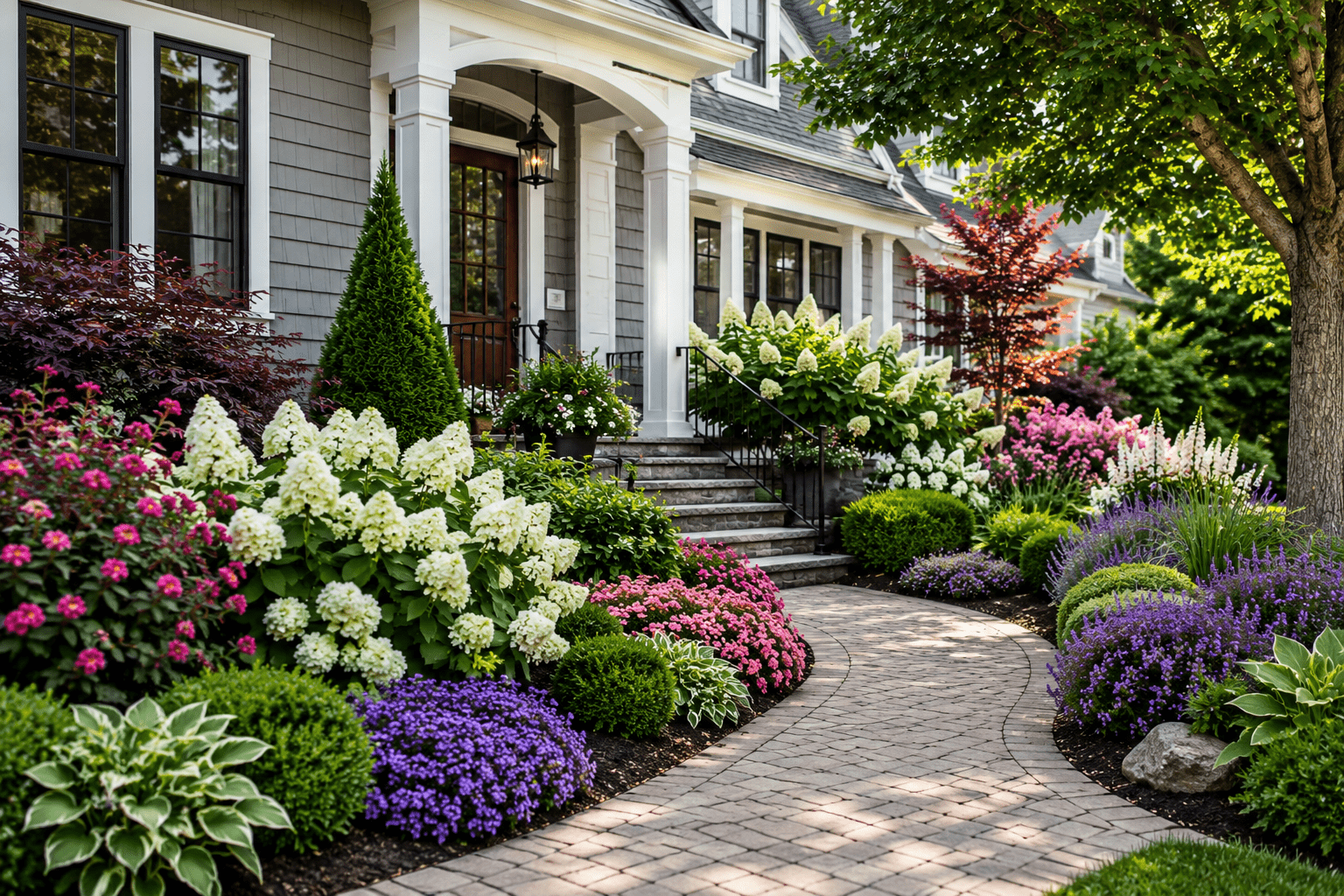
Unlike many hydrangeas, Panicle Hydrangeas tolerate full sun exceptionally well, making them one of the easiest flowering shrubs to grow.
Their enormous cone-shaped flower clusters begin white during summer before gradually changing to shades of pink, rose, or burgundy in autumn.
Hardy in Zones 3–8, they provide spectacular blooms even in colder climates.
Favorite varieties include:
- Limelight
- Little Lime
- Fire Light
- Bobo
- Pinky Winky
These shrubs make outstanding focal points near entrances, along walkways, or as anchor plants in foundation landscapes.
Maintenance Tips
- Prune in late winter since flowers develop on new wood.
- Water deeply during dry periods.
- Fertilize lightly in spring.
- Allow adequate spacing for mature growth.
17. Peonies
Peonies have been treasured in gardens for generations thanks to their enormous, fragrant blossoms and exceptional longevity. Once established, a peony can thrive for decades with minimal care.
Growing best in Zones 3–8, peonies bloom in late spring with flowers available in shades of:
- White
- Pink
- Coral
- Red
- Deep burgundy
Their glossy green foliage remains attractive throughout summer, adding texture long after flowering has ended.
Peonies are especially effective near entryways, walkways, and cottage-style landscapes where their impressive blooms can be fully appreciated. Though be forewarned, ants are prolific around these plants.
Maintenance Tips
- Plant in full sun.
- Avoid burying crowns too deeply.
- Stake large-flowered varieties if necessary.
- Remove foliage after frost to reduce disease.
18. Crape Myrtle
For homeowners in warmer climates, few shrubs or small trees rival the beauty of Crape Myrtle. Blooming continuously from early summer into fall, these plants deliver months of vibrant color when many other shrubs have finished flowering.
Hardy in Zones 6–10 depending on variety, Crape Myrtles are available in:
- White
- Pink
- Lavender
- Purple
- Red
Even after flowering, their smooth, peeling bark provides winter interest, while many varieties develop brilliant orange and red fall foliage.
They’re ideal as specimen trees, driveway accents, or focal points in front landscapes.
Maintenance Tips
- Plant in full sun.
- Water during prolonged drought.
- Avoid excessive pruning (“crape murder”).
- Fertilize each spring lightly.
19. Rhododendrons
Rhododendrons create one of spring’s most spectacular floral displays. Their massive flower trusses nearly cover the shrub, producing breathtaking color that instantly elevates curb appeal.
Hardy in Zones 4–8 depending on variety, Rhododendrons prefer partial shade and acidic, well-drained soil.
Flower colors include:
- White
- Pink
- Lavender
- Purple
- Red
- Yellow
Evergreen foliage ensures these shrubs remain attractive year-round.
They pair beautifully with hostas, ferns, hydrangeas, and Japanese Maples in woodland-inspired landscapes.
Maintenance Tips
- Water during dry periods.
- Mulch with pine bark.
- Remove spent flower clusters.
- Protect from harsh afternoon sun.
20. Dwarf Hinoki Cypress
If texture is missing from your landscape, Dwarf Hinoki Cypress delivers it in abundance. This slow-growing evergreen features dense, fan-like foliage that adds sophistication to foundation beds.
Growing in Zones 4–8, Hinoki Cypress develops naturally sculptural forms with very little pruning.
Its compact growth makes it perfect for:
- Entry gardens
- Rock gardens
- Foundation beds
- Japanese-inspired landscapes
- Mixed evergreen borders
Unlike many evergreens, its unique texture creates year-round visual interest.
Maintenance Tips
- Plant in full to partial sun.
- Water regularly during establishment.
- Avoid heavy pruning.
- Mulch annually to conserve moisture.
21. Salvia
Salvia is a favorite among professional landscape designers because it blooms repeatedly, attracts pollinators, and tolerates heat exceptionally well.
Hardy in Zones 4–10 depending on the species, Salvia produces spikes of flowers in:
- Blue
- Purple
- Pink
- White
- Red
Blooming begins in late spring and often continues through fall with occasional deadheading.
Salvia works beautifully alongside roses, coneflowers, ornamental grasses, and lavender.
Its upright growth habit adds vertical interest to mixed borders.
Maintenance Tips
- Plant in full sun.
- Remove spent flower spikes.
- Avoid overwatering.
- Divide mature plants every few years.
22. Ninebark
Ninebark offers outstanding four-season appeal thanks to colorful foliage, spring flowers, attractive seed heads, and peeling winter bark.
Hardy in Zones 3–7, this adaptable native shrub thrives in full sun to partial shade.
Modern varieties feature foliage in:
- Burgundy
- Copper
- Golden yellow
- Deep purple
White or pale pink flowers appear in late spring, followed by decorative seed clusters.
Popular cultivars include:
- Diablo®
- Summer Wine®
- Tiny Wine®
Ninebark makes an excellent backdrop for perennial gardens while providing year-round landscape structure.
Maintenance Tips
- Prune after flowering if needed.
- Remove older stems every few years.
- Water consistently while establishing.
- Fertilize each spring lightly.
23. Creeping Phlox
For early spring color, few groundcovers can match Creeping Phlox. During bloom, dense mats of flowers nearly conceal the foliage, creating a carpet of vibrant color.
Hardy in Zones 3–9, Creeping Phlox thrives in sunny locations with well-drained soil.
Available colors include:
- Pink
- Purple
- Blue
- White
- Lavender
It’s particularly effective:
- Along walkways
- On slopes
- Around retaining walls
- In rock gardens
- At landscape edges
Its cascading habit softens hardscape features and provides excellent erosion control.
Maintenance Tips
- Trim lightly after flowering.
- Avoid wet soils.
- Divide every few years if necessary.
- Water during extended drought.
24. Serviceberry
Serviceberry is one of the few landscape plants that offers beauty in every season. This small ornamental tree begins spring covered in delicate white flowers before producing edible purple berries that attract birds.
Summer brings attractive green foliage, while autumn transforms the tree into brilliant shades of orange, yellow, and red.
Hardy in Zones 4–9, Serviceberry adapts well to many landscape styles and grows in full sun to partial shade.
Its modest size makes it ideal for:
- Front lawns
- Entry gardens
- Accent plantings
- Woodland borders
Because it offers flowers, fruit, and fall color, Serviceberry provides tremendous year-round value.
Maintenance Tips
- Water regularly during establishment.
- Prune only to remove dead branches.
- Mulch around the root zone.
- Inspect occasionally for common leaf diseases.
25. Limelight Hydrangea
Few shrubs command attention quite like Limelight Hydrangea. This award-winning Panicle Hydrangea produces enormous lime-green flower clusters that gradually mature to creamy white before developing rich pink hues in autumn.
Hardy in Zones 3–8, Limelight thrives in full sun to partial shade and is remarkably dependable across much of the United States.
Its large blooms make it ideal for:
- Foundation beds
- Property corners
- Mixed shrub borders
- Specimen plantings
- Privacy screens
Even after flowering, dried blooms remain attractive throughout winter, extending seasonal interest.
Maintenance Tips
- Prune in late winter.
- Water deeply during hot weather.
- Apply mulch annually.
- Fertilize each spring lightly.
How to Choose the Right Plants for Your Home
Choosing plants based solely on appearance can lead to disappointing results. Before purchasing, evaluate your property’s growing conditions and long-term maintenance expectations.
Start by identifying your USDA Hardiness Zone to ensure plants can survive local winters. Observe how much sunlight each planting area receives throughout the day, as some plants flourish in full sun while others require partial or full shade.
Also consider each plant’s mature height and width. Crowded landscapes often require unnecessary pruning and can quickly appear overgrown. Selecting appropriately sized plants allows them to develop naturally while maintaining a balanced design.
Aim to include a combination of evergreen shrubs, flowering perennials, ornamental grasses, and small trees. This layered approach provides year-round structure, seasonal color, and textural variety that keeps your landscape attractive in every season.
Landscape Designer Tips for Maximum Curb Appeal
Professional-looking landscapes rely on thoughtful design as much as beautiful plants.
Layer your landscape by placing taller trees and shrubs toward the back of planting beds, medium-sized shrubs in the middle, and colorful perennials and groundcovers in front. Repeating the same plants throughout your landscape creates unity and makes even smaller yards feel professionally designed.
Evergreens should form the backbone of your design, ensuring your property retains structure during winter. Flowering shrubs and perennials then provide changing bursts of seasonal color.
Finally, finish every planting bed with fresh mulch. Mulch suppresses weeds, retains moisture, protects roots, and gives the landscape a clean, polished appearance that immediately enhances curb appeal.
Conclusion
The right plants can completely transform your home’s exterior, creating an inviting landscape that looks beautiful throughout the year. Whether you’re drawn to the timeless elegance of hydrangeas, the structure of evergreen shrubs, the movement of ornamental grasses, or the vibrant blooms of flowering perennials, each plant on this list offers unique benefits that contribute to a more attractive front yard.
Rather than trying to include every plant at once, begin with a few dependable favorites that suit your climate, sunlight, and maintenance preferences. Over time, you can expand your landscape by layering additional shrubs, trees, and seasonal flowers to create a cohesive design.
Thoughtful plant selection, proper spacing, and consistent care will reward you with a landscape that not only boosts curb appeal but also enhances your enjoyment of your home for years to come.
Frequently Asked Questions
What plants increase curb appeal the most?
Hydrangeas, Japanese Maples, Boxwoods, Limelight Hydrangeas, Knock Out® Roses, Arborvitae, and ornamental grasses are among the top choices for creating immediate visual impact and year-round beauty.
Which plants look good all year?
Evergreen plants such as Boxwood, Arborvitae, Dwarf Alberta Spruce, and Dwarf Hinoki Cypress provide structure and color in every season. Pairing them with plants that offer spring flowers, summer blooms, and fall foliage creates continuous interest.
What are the best low-maintenance landscaping plants?
Sedum, Daylilies, Coneflowers, Black-Eyed Susans, Lavender, Salvia, and ornamental grasses require minimal care once established. These plants are drought-tolerant, resilient, and ideal for busy homeowners.
Which flowering shrubs bloom the longest?
Knock Out® Roses, Panicle Hydrangeas, Limelight Hydrangeas, Crape Myrtles, and reblooming Weigela varieties provide extended flowering seasons that often last from late spring through early fall.
How many different plants should I use in my front yard?
A cohesive landscape generally looks best with a limited plant palette. Repeating 7 to 12 well-chosen plant varieties throughout the front yard creates harmony while avoiding a cluttered appearance.
What is the best evergreen shrub for foundation planting?
Boxwood remains one of the most popular foundation shrubs due to its compact growth, year-round color, adaptability, and ability to complement nearly every architectural style. For taller screening or vertical accents, Arborvitae is an excellent alternative.