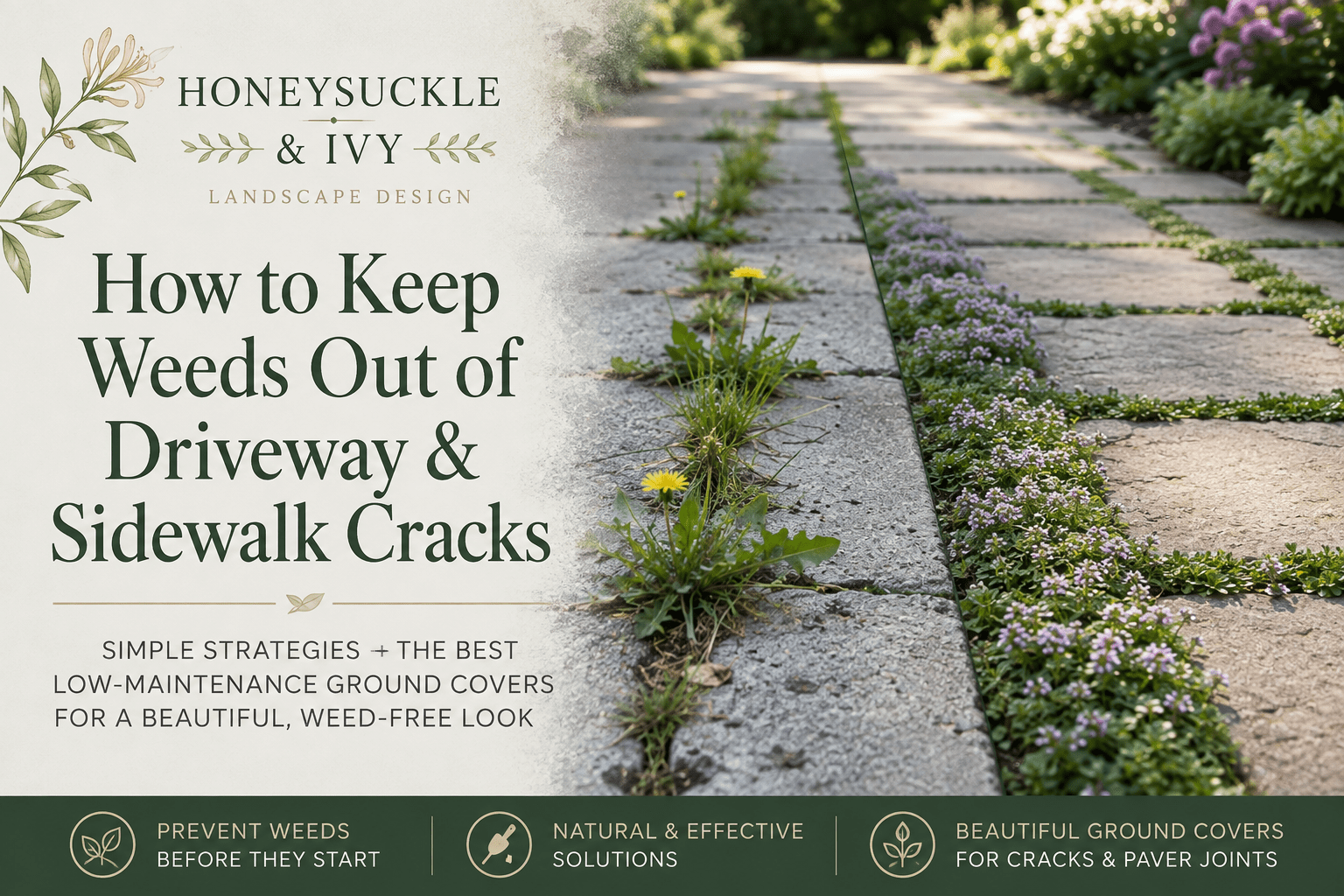
Few things make a beautiful landscape look neglected faster than weeds sprouting from driveway and sidewalk cracks. Whether it’s dandelions, crabgrass, spurge, or stubborn broadleaf weeds, these unwanted plants seem to appear overnight.
The good news? You don’t have to spend every weekend pulling weeds by hand. With a few preventative measures—and by choosing the right low-maintenance plants in the right situations—you can dramatically reduce weed growth while adding charm and curb appeal to your property.
Here’s how.
Why Do Weeds Grow in Cracks?
Concrete and asphalt naturally expand and contract with changing temperatures. Over time, tiny cracks form, collecting:
- Windblown soil
- Dust
- Organic matter
- Grass clippings
- Fallen leaves
These materials create the perfect environment for weed seeds to germinate. Add sunlight and occasional moisture, and you’ve unintentionally created a miniature garden.
The key is stopping weeds before they become established.
1. Keep Cracks Clean
The first—and most overlooked—step is removing the soil that weeds need.
At least twice each year:
- Blow debris away with a leaf blower.
- Sweep sidewalks regularly.
- Remove leaves before they decompose.
- Pressure wash cracks every spring.
Without accumulated soil, most weed seeds simply cannot establish roots.
2. Pull Weeds While They’re Small
One mature weed can produce thousands of seeds.
Removing weeds when they’re only a few inches tall prevents future infestations.
For best results:
- Pull after rain when soil is moist.
- Remove the entire root.
- Dispose of weeds before they flower or produce seed.
3. Seal Existing Cracks
If cracks are large enough to collect dirt, they’re large enough to support weeds.
Use:
- Concrete crack filler
- Flexible polyurethane sealant
- Asphalt crack filler for blacktop driveways
Besides stopping weeds, sealing cracks prevents water infiltration that can lead to freeze-thaw damage and larger repairs.
4. Use Natural Weed Killers Carefully
If weeds are already established, several non-selective options can help.
Boiling Water
One of the safest methods.
Simply pour boiling water directly onto weeds.
Best for:
- Sidewalk cracks
- Patio joints
- Small infestations
Horticultural Vinegar
Professional-strength horticultural vinegar (20–30% acetic acid) can quickly burn back weeds.
Important:
- Wear gloves and eye protection.
- Avoid contact with desirable plants.
- Follow all label directions.
Household vinegar is generally less effective on established perennial weeds.
Flame Weeders
Propane weed torches briefly heat plant tissue, causing weeds to die without chemicals.
They’re especially effective on:
- Gravel driveways
- Paver joints
- Long sidewalk cracks
Never use them during dry conditions or near mulch, dry vegetation, or structures.
5. Prevent Future Weed Growth
Once cracks are clean, prevention becomes much easier.
Consider:
- Annual crack inspection
- Prompt crack repair
- Keeping edges trimmed
- Avoiding excess irrigation near pavement
- Removing debris before it decomposes
Consistency is far easier than reclaiming an overgrown driveway.
Should You Plant Ground Covers in Sidewalk or Driveway Cracks?
Sometimes.
If the cracks are intentional design joints, decorative stone pathways, flagstone walkways, or paver patios, living ground covers can create a stunning cottage-style look.
However, if they’re structural cracks in concrete or asphalt, plants can make the cracks worse over time by trapping moisture and expanding into the opening. In these cases, repairing the crack is the better long-term solution.
For decorative pathways, though, low-growing plants can soften hardscape beautifully while helping crowd out weeds.
Best Low-Maintenance Ground Covers for Decorative Cracks & Paver Joints
Creeping Thyme (Thymus serpyllum)
One of the most popular choices.
Benefits:
- Fragrant foliage
- Tiny pink or purple flowers
- Drought tolerant
- Handles light foot traffic
- Attracts bees and butterflies
Height:
1–3 inches
Maintenance:
Very low.
Irish Moss (Sagina subulata)
Creates a lush, soft green carpet.
Best for:
- Cool climates
- Partial sun
- Stone pathways
Height:
1–2 inches
Maintenance:
Low, though it appreciates occasional moisture.
Scotch Moss (Sagina subulata ‘Aurea’)
Similar to Irish Moss but with bright chartreuse foliage that adds striking contrast between stones.
Excellent for shaded garden paths.
Blue Star Creeper (Isotoma fluviatilis)
A favorite among landscape designers.
Features:
- Tiny blue flowers
- Dense growth
- Tolerates occasional foot traffic
- Fills joints beautifully
Height:
1–2 inches
Maintenance:
Very low.
Creeping Mazus (Mazus reptans)
Produces colorful purple flowers in spring.
Benefits:
- Fast spreading
- Dense foliage
- Helps suppress weeds
Works especially well between stepping stones.
Dwarf Mondo Grass (Ophiopogon japonicus ‘Nana’)
Perfect for modern landscapes.
Features:
- Evergreen
- Rich green color
- Neat appearance
- Extremely durable
Best in partial shade.
Corsican Mint (Mentha requienii)
One of the most fragrant options.
Walking across it releases a refreshing mint scent.
Best for:
- Partial shade
- Decorative pathways
Not ideal for heavy foot traffic.
Sedum (Stonecrop)
Many creeping sedums thrive in hot, dry conditions.
Benefits:
- Extremely drought tolerant
- Colorful foliage
- Excellent for sunny locations
- Nearly maintenance free
Popular varieties include:
- ‘Angelina’
- ‘Dragon’s Blood’
- ‘Blue Spruce’
Plants to Avoid
These plants spread aggressively or grow too large for narrow joints:
- English Ivy
- Mint
- Bamboo
- Pachysandra
- Vinca (Periwinkle)
- Large ornamental grasses
- Any woody shrub or tree seedlings
Their roots can widen cracks and damage pavement over time.
Additional Weed Prevention Tips
For gravel driveways:
- Install quality landscape fabric beneath gravel.
- Maintain a 3–4 inch gravel layer.
- Replenish gravel every few years.
For paver patios:
- Refill joints with polymeric sand after pressure washing.
- Polymeric sand hardens when activated with water, helping reduce weed growth while stabilizing pavers.
For concrete driveways:
- Inspect joints every spring.
- Repair small cracks before they become large ones.
- Keep organic debris from accumulating.
A Beautiful Landscape Starts with the Details
Driveways and sidewalks often frame the first impression of your home. Additionally, keeping them free of weeds creates a cleaner, more polished appearance and reduces long-term maintenance.
If you’re looking to soften hardscape, decorative pathways and paver patios offer an excellent opportunity to introduce beautiful, low-growing plants like creeping thyme, blue star creeper, Irish moss, or sedum. Used thoughtfully, these living accents can transform ordinary walkways into charming landscape features while naturally discouraging weeds.
At Honeysuckle & Ivy Landscape Design, we believe every detail matters. Whether you’re refreshing an entryway, planning a complete landscape renovation, or searching for creative ways to reduce maintenance, thoughtful design choices can help your outdoor spaces remain beautiful throughout every season.